Fiverr Workspace Alternatives: A Comprehensive Guide to Seamless Business Migration
Fiverr Workspace is gone. If you're one of the thousands of freelancers left without a platform, this step-by-step migration guide will help you rebuild your professional infrastructure in under an hour.
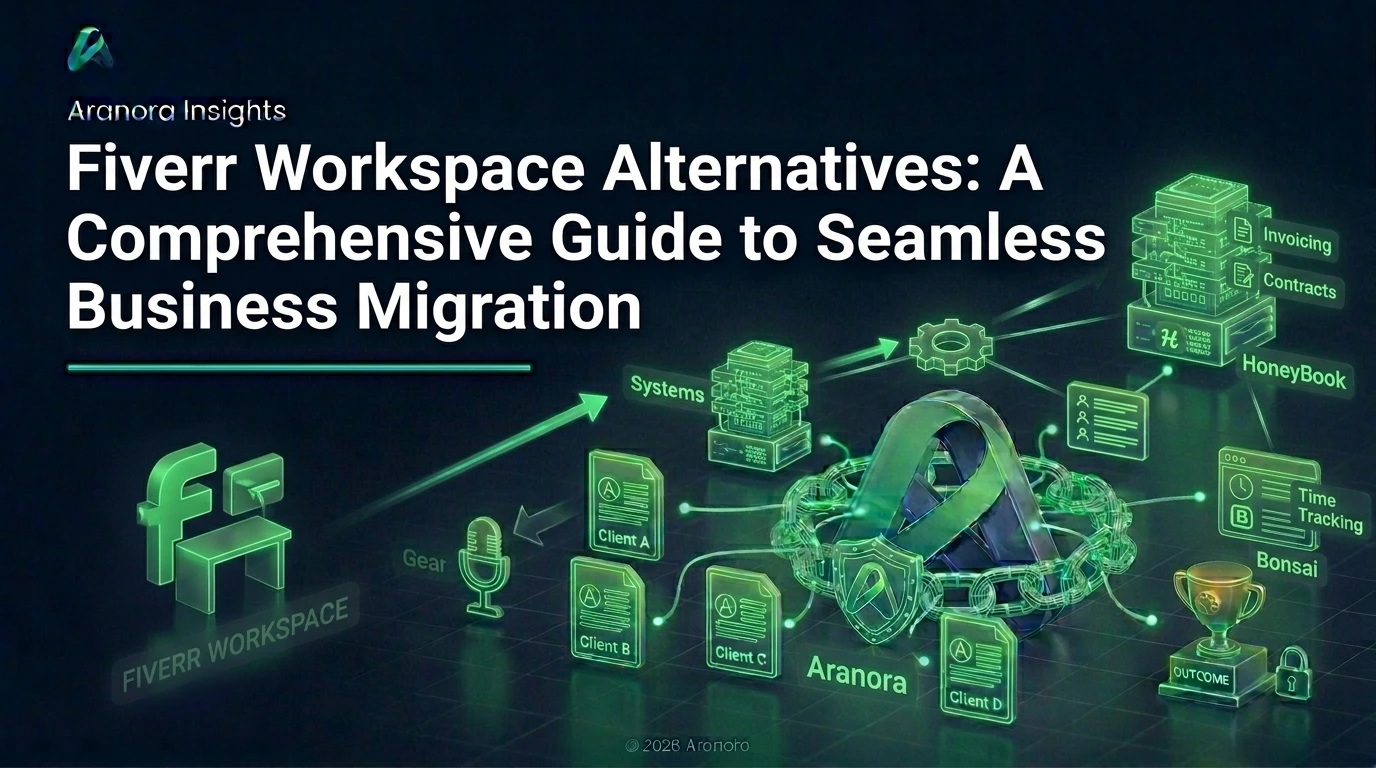
On March 15, 2026, Fiverr officially shut down its Workspace product—the platform formerly known as And.co that served as a business management hub for thousands of independent professionals. The closure came with minimal notice and, critically, no structured migration path for users who had built their entire invoicing, contract, and client management systems on the platform.
If you are one of those displaced professionals, this guide provides a complete, step-by-step roadmap for migrating your freelance business to a stable, professional-grade alternative.
What You Lost—And What You Need to Replace
Fiverr Workspace provided five core functions that you now need to replicate in a new system:
- Invoicing and payment tracking
- Proposal and contract creation
- Time tracking
- Expense management
- Client communication records
The most common mistake displaced users make is replacing each function with a separate tool—one app for invoicing, another for contracts, another for time tracking. This "franken-stack" approach creates more administrative overhead than the original platform and introduces security vulnerabilities at every integration point.
The Migration Checklist
Before setting up any new platform, complete this data preservation checklist:
Step 1: Export Your Historical Data
- Download all invoice PDFs from your Fiverr Workspace archive (if still accessible via support request).
- Export your client contact list, including email addresses and project histories.
- Save copies of all signed contracts and proposals.
- Screenshot or export your expense records for tax purposes.
- Document your payment terms, late fee policies, and recurring invoice templates.
Step 2: Audit Your Active Projects
- List all projects with outstanding invoices or active milestones.
- Identify clients who need to be notified of your platform change.
- Note any recurring invoices that need to be recreated.
- Flag contracts that are mid-execution and require continuity.
Step 3: Evaluate Replacement Platforms
| Criteria | Why It Matters | Aranora | HoneyBook | Bonsai |
|---|---|---|---|---|
| Setup Time | Minimizes business disruption | Under 60 seconds | 2-4 hours | 1-3 hours |
| Free Trial | Test before committing | Yes, no card required | 7 days | Limited free tier |
| Secure Contracts | Legal protection | Built-in secure agreements | Yes | Higher tiers only |
| Milestone Tracking | Project transparency | Yes, with client visibility | Limited | Basic |
| Platform Stability | No more forced migrations | Independent, stable | 89% price hike in 2026 | Acquired by Zoom |
| Enterprise Security | Client data protection | Enterprise-grade | Standard | Standard |
Step 4: Set Up Your New Professional Ecosystem
If you choose Aranora, the migration process is designed to be frictionless:
- Create your account — Sign up takes under 60 seconds with no credit card required.
- Configure your professional profile — Set up your business name, branding, and contact information.
- Recreate your contract templates — Use Aranora's secure agreement builder to rebuild your standard contracts with legally sound milestone structures.
- Set up your client portals — Create dedicated workspaces for each active client, providing them with professional, branded access to project progress.
- Issue your first invoice — Aranora's lightning-fast invoicing system lets you generate and send professional invoices within minutes of setup.
Step 5: Communicate the Transition to Clients
Professional communication during a platform migration reinforces client confidence. Send a brief, professional notification:
"I've upgraded my business management infrastructure to provide you with enhanced security, real-time project tracking, and a dedicated client portal. You'll receive future invoices and project updates through this new system. No action is required on your end."
Notice the framing: you are not "switching tools because your old one shut down." You are upgrading your professional infrastructure. This distinction matters for client perception.
Why "All-in-One" Matters More Than Ever
The closure of Fiverr Workspace is a cautionary tale about platform dependency. But the solution is not to avoid platforms entirely—it is to choose a platform built on principles of stability, security, and professional-grade functionality.
A fragmented stack of free tools introduces three critical risks:
- Data silos: Client information scattered across multiple systems creates inefficiency and errors.
- Security gaps: Each integration point is a potential vulnerability for client data.
- Unprofessional presentation: Clients who receive invoices from one system, contracts from another, and project updates via email perceive disorganization.
Aranora consolidates these functions into a single, secure professional ecosystem—giving you the stability that Fiverr Workspace promised but could not deliver.
Your business deserves infrastructure that will be here next year, and the year after that. Start your free migration to Aranora today.
Ready to streamline your freelance business?
Try Aranora free for 30 days. No credit card required.
Start Free TrialMore Articles
Financial Resilience for Freelancers: Managing Unpredictable Income Through Structured Milestones
Unpredictable income is the #1 concern for 76% of freelancers. But income isn't inherently unpredictable—it's unstructured. Here's the framework that transforms project chaos into financial clarity.
The VO Administrative Stack: Why Systems, Not Gear, Determine Your Voice-Over Business Growth
You've invested in the microphone, the booth, and the training. But if your business is still running on scattered emails and handshake agreements, your gear isn't the problem—your systems are.
Justifying Your VO Rates: How a Professional Ecosystem Increases Client Confidence by 40%
Corporate clients don't just buy your voice—they buy confidence in your process. Here's how a professional ecosystem transforms rate conversations from negotiations into formalities.